
 Login
Login Register


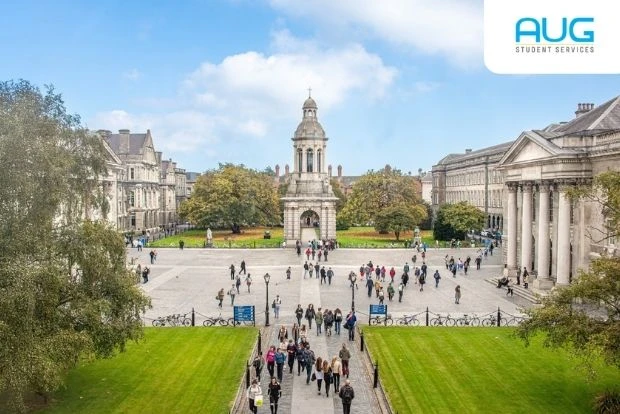
Choosing a university abroad can feel overwhelming. You are not only comparing rankings. You also need to think about the course, tuition fees, entry requirements, location, accommodation and what life will be like after you arrive.
Ireland gives International Students a wide range of higher education choices in an English-speaking environment. From long-established universities to technological universities, students can explore programmes across business, technology, engineering, science, humanities, health and many other fields.
If you are considering a university in Ireland, this guide will help you understand the main options and the questions to ask before applying.
Why Study at a University in Ireland?
Ireland combines an established higher education system with a strong international outlook. Students can choose from universities in major cities as well as institutions in smaller locations, which means the study experience can vary greatly depending on where you go.
For students who want to study in Ireland, one advantage is the variety of programmes available across different types of institutions. Higher education programmes can span Levels 6 to 10 of Ireland’s National Framework of Qualifications (NFQ), depending on the award and provider.
Ireland is also home to international companies across sectors such as technology, pharmaceuticals, finance and professional services. However, students should choose a degree based on its course content, suitability and long-term goals rather than relying on the destination alone.
Understanding Universities and Higher Education in Ireland
Not every higher education provider in Ireland is the same. Traditional universities often offer a broad mix of undergraduate, postgraduate and research programmes. Technological universities place strong emphasis on applied learning, industry links and career-focused programmes. There are also specialist and other recognised higher education providers.
For non-EEA students planning to stay for more than 90 days, it is especially important to check whether the chosen programme is eligible for study immigration purposes. Ireland’s Immigration Service advises students to check the Interim List of Eligible Programmes (ILEP) and the TrustEd Ireland Providers eligible programmes list, where relevant.
Universities in Ireland for International Students
There is no single ‘best’ university in Ireland for every student. A better approach is to compare institutions based on your preferred subject, learning style, budget and location.
| Institution | Location | What to explore |
|---|---|---|
| Trinity College Dublin | Dublin | Broad academic offering and research-led study |
| University College Dublin | Dublin | Wide range of undergraduate and postgraduate disciplines |
| University College Cork | Cork | Broad programmes across arts, business, science and health |
| University of Galway | Galway | Programmes across humanities, business, science and engineering |
| University of Limerick | Limerick | Applied learning, business, technology and other disciplines |
| Dublin City University | Dublin | Business, communications, computing, science and more |
| Maynooth University | Maynooth | Arts, social sciences, business and science |
| RCSI University of Medicine and Health Sciences | Dublin | Specialist health and medical education |
| Technological University Dublin | Dublin | Applied and career-focused programmes |
| Atlantic Technological University | Multiple campuses | Technology, business, science and applied disciplines |
How to Choose the Right University in Ireland
Rankings can be useful, but they should not make the decision for you. Start with the degree itself. Two universities may offer programmes with similar titles but very different modules, assessment methods and specialisations.
Not sure how to compare your options? Read AUG’s guide to choosing a university course for a practical way to assess course content, strengths and future goals.
When comparing Ireland universities for International Students, look at:
Check the modules, electives, internships, placements and assessment methods.
Confirm the academic and English language criteria for your exact programme.
Compare fees together with accommodation, transport and daily expenses.
Think about city size, transport, lifestyle and distance from campus accommodation.
Review International Student services, academic support and career services.
Consider how the programme supports your academic or career direction without assuming a degree guarantees a particular job or immigration outcome.

Popular Courses to Study in Ireland
Courses in Ireland for International Students cover a broad range of fields. Popular choices often include business and management, computing and data-related subjects, engineering, science, humanities, social sciences, communications and health-related programmes.
Instead of choosing a subject simply because it is popular, compare the actual curriculum. For example, one business degree may focus on analytics while another gives more space to marketing or finance. Likewise, computing programmes can differ in areas such as software development, artificial intelligence, cybersecurity and data science.
How Much Does It Cost to Study in Ireland?
Ireland university fees vary by institution, programme and study level. International Students should always check the current fee listed for their specific course and intake. Specialist programmes, particularly in medicine and health sciences, can cost substantially more than many business, arts or humanities degrees.
Your cost of studying in Ireland also goes beyond tuition. Build a budget that includes:
- Tuition and university charges
- Accommodation and deposits
- Food and everyday expenses
- Local transport
- Private medical insurance, where required
- Visa and immigration-related costs, where applicable
- Flights, study materials and personal expenses
Accommodation deserves early attention. Availability and prices can differ greatly by location, so students should research university residences and private options well before travelling.
As you prepare for campus life, AUG’s guide to making friends at university also offers practical tips for adjusting to a new social environment.
Ireland University Admission Requirements
Ireland university requirements are not identical across all institutions. Each university sets its own academic criteria, application process and deadlines. Requirements may also differ between programmes within the same university.
Applicants may need academic transcripts or school results, proof of English language ability, a passport and other supporting documents. Some programmes may request a portfolio, personal statement, interview or subject prerequisites.
Students from outside the EU generally apply directly to their chosen university, according to the Irish Universities Association. Therefore, check the international admissions page for each institution rather than assuming one application process applies everywhere.
Scholarships in Ireland for International Students
Scholarship opportunities can come from individual universities as well as national schemes. Awards may be based on academic merit, programme, study level or other eligibility criteria, so the amount and conditions vary.

How to Apply to Universities in Ireland
A clear application plan can make the process easier. A typical journey looks like this:
Application dates differ, so start early. This also gives you more time to prepare documents and consider accommodation instead of rushing after receiving an offer.
Ireland Student Visa and Preparing to Move
Visa requirements depend on factors such as nationality and length of stay. Ireland’s Immigration Service states that Visa-required students coming for more than 90 days generally need a Long Stay ‘D’ Visa. Students staying longer than 90 days must also register after arrival, where applicable.
For a long-term study Visa, supporting documents can include a letter of acceptance, evidence of academic ability and English language ability, proof of finances, fee payment and private medical insurance. Because immigration rules can change, always check the latest official requirements before submitting an application.
Questions to Ask Before Choosing a University in Ireland
Before accepting an offer, students and parents should be able to answer a few practical questions:
- Does the course include the subjects and specialisations I actually want?
- Do I meet the academic and English requirements?
- What is the full annual budget, not just the tuition fee?
- What accommodation options are available near the campus?
- Are scholarships available for my programme and study level?
- What academic, wellbeing and career support does the university provide?
- If I need immigration permission, is my programme eligible and what documents will I need?
Answering these questions makes it easier to compare universities based on fit rather than name recognition alone.
Students moving directly from high school can also read AUG’s guide to handling university workload to understand how university learning differs from school.
FAQ: Universities in Ireland
Start Your Ireland University Journey with AUG
Choosing where and what to study is a major decision, but you do not have to manage every step on your own. AUG Student Services can help you compare university options, understand entry requirements, prepare applications and keep track of the steps involved in studying abroad.
Our education consultants can guide eligible students through the university application process at no cost, helping you save time and avoid the hassle of managing multiple applications alone. Whether you are still comparing courses or are ready to apply, the next step is to discuss your study goals and shortlist suitable options.
Speak with an AUG education consultant to start planning your study journey in Ireland.