
 Login
 Register


Wellington is the capital of New Zealand and one of the most compact university cities in the world. It sits on a harbour, is surrounded by green hills, and has a strong creative and civic culture. As a result, many students choose to study abroad in Wellington for its mix of academic quality and lifestyle.
This guide explains what to expect. It covers universities, costs, Visas, work rights and daily life. It also offers practical tips to help you choose the right programme. If you are considering New Zealand, Wellington deserves a close look.
Government and policy hub: Parliament, ministries and embassies are all here. This creates internship and graduate pathways in public policy, law and international relations.
Creative industries: Wellington is home to Wētā Workshop and a thriving film, design and gaming scene. Students in media, animation and design benefit directly.
Compact and walkable: Most campuses, cafés and cultural venues sit within a 20 minute walk of each other. Consequently, students save on transport and settle in quickly.
Safe and welcoming: New Zealand consistently ranks among the safest countries globally. Wellington also has a diverse and friendly student community.
In short, the city offers both strong education and a high quality of life. That balance is why it matters.
Universities and Institutions in Wellington
Wellington hosts one major research university, a campus of another national university, and vocational providers. Each serves a different type of student.
Victoria University of Wellington (Te Herenga Waka)
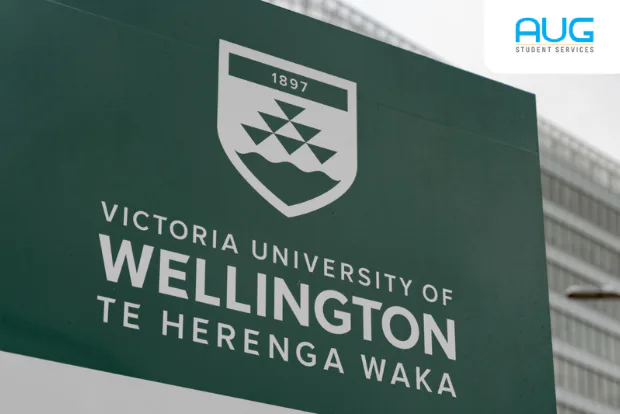
This is the city’s flagship university and one of New Zealand’s oldest. It is highly regarded for law, humanities, public policy, architecture, design and the sciences. The university has three main campuses: Kelburn, Pipitea and Te Aro. All are within the city centre. International Students can access a wide range of undergraduate and postgraduate degrees.
Massey University (Wellington Campus)
Massey’s Wellington campus focuses on creative arts, design, communication, health and business. It is widely recognised for its College of Creative Arts. The campus is located in Mount Cook, a short walk from Cuba Street and the city’s arts district.
Vocational and Pathway Providers
Whitireia and WelTec offer diplomas, certificates and applied degrees. These suit students who want hands-on training in fields such as IT, nursing, hospitality and engineering. Pathway programmes are also available for students who need English language or foundation study before university.
| Institution | Known For | Typical Student |
|---|---|---|
| Victoria University of Wellington | Law, policy, humanities, science, design | Academic and research-focused |
| Massey University (Wellington) | Creative arts, design, business, health | Creative and professional |
| Whitireia and WelTec | Applied diplomas, trades, IT, nursing | Practical and career-ready |

Supporting Information: Costs, Visas and Work Rights
Tuition Fees
International tuition in Wellington is generally lower than in Australia, the UK or the US. Undergraduate degrees typically range from about NZD 30,000 to NZD 40,000 per year. Postgraduate fees vary more widely, depending on the field. Vocational diplomas are usually cheaper. Always check the exact fee on the institution’s website before applying.
Living Costs
Immigration New Zealand requires students to show at least NZD 20,000 per year for living expenses. In practice, many students spend around this amount. A room in a shared flat often costs NZD 250 to NZD 350 per week. Student accommodation on campus can cost more but usually includes utilities and meals. Groceries, transport and entertainment add roughly NZD 150 to NZD 250 per week.
Student Visa
Most International Students need a Fee Paying Student Visa. To apply, you will need an offer of place, proof of funds, health insurance and a valid passport. Processing times vary, so apply early. Additionally, most students must hold approved medical and travel insurance for the full duration of their study.
Working While You Study
Eligible Student Visa holders can work up to 20 hours per week during the semester. During scheduled holidays, you can usually work full time. Wellington has a strong hospitality and retail sector, so part-time jobs are available. Moreover, research students at master’s and PhD level often have unrestricted work rights.
Post-Study Work Visa
After graduating, many students qualify for a Post-Study Work Visa. Depending on your qualification, this can last up to three years. It allows you to gain New Zealand work experience and, for some, a pathway toward residence. This is one of the strongest reasons to study abroad in Wellington rather than elsewhere.

Tips for Choosing the Right University in Wellington
Every student has different goals. Therefore, consider the following points before you decide.
A design student may thrive at Massey. A future lawyer may prefer Victoria. Match the institution to your field.
Look for programmes with internships, placements or capstone projects. Wellington’s government and creative sectors make these valuable.
Include accommodation, insurance, flights and living expenses. A cheaper programme may cost more overall.
If your grades or English score fall short, foundation or diploma routes can still lead to a degree.
Some qualifications unlock longer work Visas than others. Plan with the end in mind.
Social media groups and university ambassadors can give honest insights into campus life.

Summary
Wellington combines respected universities with a lifestyle that is hard to match. Students benefit from a safe environment, close industry links and clear post-study work pathways. Costs are moderate compared to other English-speaking destinations. Above all, the city’s size makes it easy to build a community and feel at home.
If you want an education that connects to government, design, technology or research, the decision to study abroad in Wellington is well worth considering. Plan your budget, choose the right institution, and apply early.
Need Help Getting Started?
If you would like guidance on applications, Visas or choosing a programme, the AUG Student Services is happy to help. Feel free to reach out for a free, no-obligation chat.