
 Login
 Register


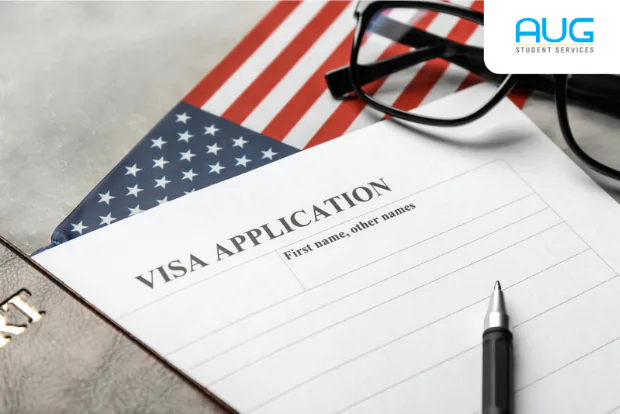
You have received—or are hoping to receive—an offer from a U.S. university. Now comes another important question: What Visa is required to study in USA?
For most International Students attending a university or college, the answer is an F-1 student Visa.
However, not every International Student uses the same Visa. Your Visa category depends on the type of institution, course and study arrangement.
The three categories you are most likely to encounter are F-1, M-1 and J-1. Therefore, understanding the difference is important before starting your application.
Here’s what each Visa means and how the U.S. student Visa process works.
Which Visa Do You Need to Study in USA?
The U.S. Department of State determines the appropriate student Visa according to your type of study.
Here’s the simplest way to understand the main options:
| Visa | Generally used for |
|---|---|
| F-1 | Universities, colleges, high schools, academic institutions and language programs |
| M-1 | Vocational or recognised non-academic programs |
| J-1 | Approved educational and cultural exchange programs |
What Is an F-1 Student Visa?
In fact, the F-1 student Visa is the main student Visa used for academic study in the United States.
According to the U.S. Department of State, an F Visa covers study at institutions including:
- universities and colleges;
- high schools;
- private elementary schools;
- seminaries;
- conservatories;
- other academic institutions; and
- language training programs.
Therefore, if you’re planning to complete a traditional undergraduate or postgraduate degree, F-1 is likely to be the Visa you will encounter.
Before reaching the Visa stage, however, you first need to secure admission from an eligible institution.
If you’re still researching your options, AUG’s guide to studying in the USA covers the main stages involved in planning your studies.
What Is an M-1 Student Visa?
In contrast, the M-1 Visa serves a different purpose.
The Department of State states that an M Visa applies to study at a vocational or other recognised non-academic institution, excluding language training programs.
This means an M-1 Visa may apply if your program focuses primarily on vocational or practical training rather than a traditional academic degree.
What Is a J-1 Visa?
You may also encounter the J-1 Exchange Visitor Visa.
Unlike the F-1 Visa, J-1 covers participation in approved exchange programs.
Moreover, EducationUSA explains that J-1 can cover exchange programs involving high school and university study.
For example, a student participating in an approved exchange arrangement may enter under J-1 rather than F-1 status.
The documentation is also different.
F-1 and M-1 students use Form I-20, while J-1 exchange visitors use Form DS-2019 issued through their eligible program sponsor.

F-1 vs M-1 vs J-1 Visa
If all these letters are getting confusing, remember the basic distinction:
F-1 = academic study
Think universities, colleges and academic programs.
M-1 = vocational study
Think vocational or recognised non-academic training.
J-1 = exchange program
Think approved educational or cultural exchange arrangements.
For a student heading overseas to complete a Bachelor’s degree at a U.S. university, the F-1 student Visa is generally the relevant category.
What Is Form I-20?
In practice, if you’re applying for an F-1 or M-1 Visa, you will hear a lot about Form I-20.
In other words, you cannot simply decide to apply for an F-1 Visa and then find a university later.
First, you must apply to and be accepted by a school approved through the Student and Exchange Visitor Program (SEVP).
Once the school accepts you, it registers you in the Student and Exchange Visitor Information System (SEVIS) and issues Form I-20.
Form I-20 is the Certificate of Eligibility for Nonimmigrant Student Status.
Consequently, you will need this document as part of your student Visa process.
How to Apply for a USA Student Visa
The exact process depends on your Visa category and circumstances, but an F-1 or M-1 journey generally begins like this:
Apply to an SEVP-approved institution
Before applying for the student Visa, you must first secure admission.
First, check your university and course requirements carefully before submitting your application.
Receive Form I-20
After you are accepted and registered in SEVIS, your eligible school issues your Form I-20.
Then, check that your personal information is correct.
Pay the I-901 SEVIS fee
Students generally need to pay the applicable I-901 SEVIS fee before their Visa interview.
Also, keep evidence of payment with your important Visa documents.
Complete the Visa application
Next, you will generally need to complete the online DS-160 Nonimmigrant Visa Application and follow the instructions provided by the U.S. embassy or consulate where you apply.
Prepare your documents
Documents can include your:
- passport;
- DS-160 confirmation;
- Form I-20;
- Visa application fee receipt, where applicable;
- supporting academic documents; and
- financial evidence.
However, officials may request additional documents depending on your circumstances.
Attend your Visa interview
Finally, a consular officer determines whether you qualify for the requested Visa.
In addition, EducationUSA recommends being ready to explain why you want to study in the United States, how you plan to finance your education and your plans after completing your studies.
For a more detailed overview, see AUG’s guide to the USA student Visa process.

Can You Study in USA on a Tourist Visa?
Generally, you should not use a visitor Visa for degree or certificate study.
In fact, the Department of State states that students cannot travel to the United States on a visitor B Visa or through the Visa Waiver Program for regular academic study. Therefore, study leading to a U.S.-conferred degree or certificate requires the appropriate student status.
However, there is a limited distinction for recreational study.
For instance, a B visitor Visa can permit a short recreational course that does not provide credit toward a degree or academic certificate.
So, taking a recreational cooking class while travelling is very different from enrolling in a university degree.
When Should You Apply for Your USA Student Visa?
Overall, you should start planning well before your intended intake.
The Visa itself comes later in the process because you first need to apply to an eligible institution, receive admission and obtain the appropriate immigration document.
Your overall timeline could look like:
Starting early also gives you more time to organise finances.
If cost is a concern, explore USA scholarships for International Students while researching universities rather than waiting until after you receive an offer.
Start Your USA Study Journey with AUG
Understanding what Visa is required to study in USA becomes much easier once you know what type of program you will take. For most students heading to an American university or college, that means preparing for the F-1 student Visa process after receiving an offer and Form I-20.
However, your Visa is only one part of your study abroad journey.
AUG Student Services can assist students at no cost, helping you explore suitable U.S. universities, compare courses, prepare university applications, look for scholarship opportunities and understand the steps involved in preparing to study overseas.
With the right guidance, you can focus on finding the university and course that fit your goals while getting support through the application process.