
 Login
 Register



Dublin is small enough to feel friendly, yet big enough to host some of Europe’s best universities. Every year, more than 35,000 International Students choose to study in Dublin. They come for English-taught degrees, a two-year post-study work Visa, and a city full of global tech and pharma employers.
This guide walks you through the main places to study in Dublin. You will also find the latest facts on costs, rankings, and Visas. Finally, we share practical tips to help you choose well.
In Dublin, the options are varied. Some institutions are 400 years old. Others opened their doors in the last decade. Each one suits a different type of student.
Because of this, it pays to understand the differences before you apply. A clear picture of each campus saves you time and money. More importantly, it helps you land in a place where you can thrive.
Where Can You Study in Dublin?
Dublin has four universities, one medical university, and several private colleges. Here is a quick comparison of the most popular choices.
| Institution | Type | Known for | Students | Location |
|---|---|---|---|---|
| Trinity College Dublin (TCD) | Public university | Arts, law, computer science, medicine | ~21,000 | City centre |
| University College Dublin (UCD) | Public university | Business, engineering, science, agriculture | ~38,000 | Belfield, south Dublin |
| Dublin City University (DCU) | Public university | Business, communications, computing, education | ~20,000 | Glasnevin, north Dublin |
| TU Dublin | Technological university | Engineering, hospitality, design, applied science | ~29,000 | Grangegorman and other campuses |
| RCSI | Medical university | Medicine, pharmacy, physiotherapy | ~4,500 | St Stephen’s Green |
| National College of Ireland (NCI) | Private college | Business, computing, psychology | ~6,000 | IFSC docklands |
| Griffith College | Private college | Business, law, media, design | ~7,000 | South Circular Road |
Trinity College Dublin
Founded in 1592, Trinity is Ireland’s oldest and highest-ranked university. Its campus sits right in the heart of the city. Students walk past the Book of Kells on the way to class. Trinity is strong across the board, but it shines in humanities, law, and computer science. Entry is competitive, and tuition is the highest in the city. Learn more at tcd.ie.
University College Dublin
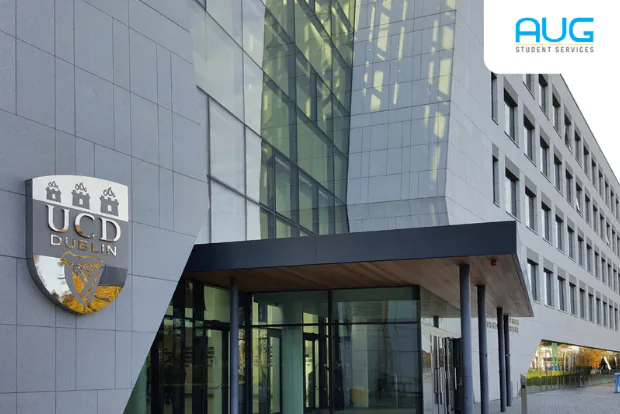
UCD is the largest university in Ireland. Its Belfield campus feels like a small town, with lakes, sports pitches, and on-site housing. The Smurfit Business School ranks among the top in Europe. UCD also leads in engineering, veterinary science, and agriculture. The campus is a 20-minute bus ride from the centre. Visit ucd.ie for details.
Dublin City University
DCU is young, practical, and career-focused. Most degrees include a paid work placement, called INTRA. As a result, DCU graduates have one of the best employment rates in Ireland. The university is especially strong in business, journalism, and computing. Fees are lower than at Trinity or UCD. See dcu.ie.

Technological University Dublin
TU Dublin was formed in 2019 from three older institutes. Its new Grangegorman campus is one of the largest education projects in Europe. Courses are hands-on and industry-linked. TU Dublin offers flexible entry routes, including Level 7 ordinary degrees that lead on to honours degrees. It is a good fit for students who prefer learning by doing. More at tudublin.ie.
RCSI and the private colleges
RCSI, the Royal College of Surgeons in Ireland, is a specialist health sciences university. Over 60 per cent of its students come from abroad. For business and tech, NCI in the docklands sits beside Google and Facebook’s offices. Griffith College and Dublin Business School offer smaller class sizes and more frequent intakes. These colleges often cost less than the public universities.
Cost of Living and Student Life
Dublin is not a cheap city, so budgeting matters. Here is what a typical student spends each month.
- Accommodation: €800 to €1,400 for a room, depending on the area and type.
- Food: €250 to €350 if you cook at home.
- Transport: about €70 with a Student Leap Card.
- Phone, utilities, and leisure: €150 to €250.
In total, most students need €1,300 to €2,000 per month. Housing is the main challenge. Therefore, apply for on-campus rooms early, ideally as soon as you accept an offer.
On the bright side, student life is lively. Dublin has over 1,000 pubs, a thriving music scene, and the sea within reach by DART train. Each university runs dozens of clubs and societies. In addition, International Students can work 20 hours per week during term and 40 hours during holidays.

Things to Consider When Choosing Where to Study in Dublin
Rankings matter, but they are not everything. Here are some practical points that students often overlook.
A lower-ranked university may have the best programme in your field. Look at module lists and staff profiles.
A paid internship during your degree can matter more to employers than the name on your certificate.
City-centre campuses are exciting but expensive. Suburban campuses often have cheaper housing and quieter study spaces.
Private colleges offer more personal attention. Large universities offer more facilities and societies.
Add tuition, housing, and living costs together. Then compare the full figure across your options.
If your grades fall short, foundation years and Level 7 degrees can still lead to your goal.
Summary
Dublin offers something for every kind of student. Trinity gives you history and prestige in the city centre. UCD provides a huge green campus and a top business school. DCU focuses on jobs and placements, while TU Dublin delivers hands-on learning. RCSI and the private colleges fill in specialist and budget-friendly options.
Before you decide, compare courses, costs, and placements side by side. Visit campuses online, speak to current students, and plan your budget early. With the right preparation, your decision to study in Dublin can be the start of a rewarding career in Europe.
Ready-to-Apply
Still weighing up your options? The team at AUG Student Services is happy to talk through Dublin universities, application timelines, scholarships and Visa steps at no cost. Drop by the office or send us a message whenever you are ready.


