
 登录
登录 登记
登记


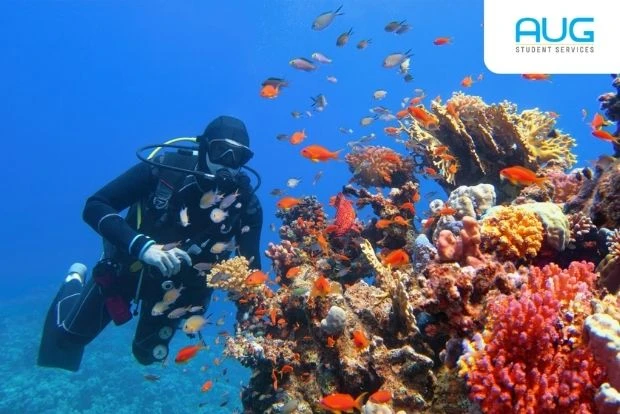
Australia is home to some of the most diverse marine ecosystems on Earth, from the Great Barrier Reef to the temperate waters of Tasmania. Because of this, marine biology universities in Australia attract thousands of local and International Students every year. These institutions offer world-class research facilities, direct access to unique field sites, and strong links to global conservation projects.
This guide explores the leading marine biology universities in Australia, what they offer, how much they cost, and what you should consider before applying. Whether you dream of studying coral reefs, marine mammals, or ocean conservation, this article will help you take the first step.
Why This Matters
Choosing the right university is one of the biggest decisions a student will make. For marine biology, this choice matters even more. Location determines your access to field sites. Research strength determines the quality of your supervisors. Industry links determine your career opportunities after graduation.
Moreover, the ocean economy is growing rapidly. Careers in marine science, aquaculture, environmental consulting, and conservation are expanding as governments invest in protecting marine environments.
Top Marine Biology Universities in Australia
Below is an overview of the most recognised marine biology universities in Australia, along with their standout strengths.
| 大学 | 地点 | Key Strength | Popular Course |
|---|---|---|---|
| James Cook University (JCU) | Townsville & Cairns, QLD | Ranked among the world’s best for marine science; direct access to the Great Barrier Reef | Bachelor of Science (Marine Biology) |
| 昆士兰大学(UQ) | 昆士兰州布里斯班 | Heron Island and Moreton Bay research stations | Bachelor of Marine Science |
| University of Tasmania (UTAS) | 塔斯马尼亚州霍巴特 | Institute for Marine and Antarctic Studies (IMAS); Southern Ocean research | Bachelor of Marine and Antarctic Science |
| 西澳大学(UWA) | 西澳珀斯 | Oceans Institute; Indian Ocean research | Bachelor of Science (Marine Biology) |
| 格里菲斯大学 | 昆士兰州黄金海岸 | Coastal management and marine ecology focus | Bachelor of Marine Science |
| 弗林德斯大学 | 南澳大利亚州阿德莱德 | Shark ecology and temperate marine systems | Bachelor of Science (Marine Biology) |
| 新南威尔士大学(UNSW) | 新南威尔士州悉尼 | Coastal oceanography and climate research | Bachelor of Marine and Coastal Science |

James Cook University: The Reef Specialist
James Cook University is consistently ranked among the top institutions in the world for marine and freshwater biology. As a result, its campuses in Townsville and Cairns sit within reach of the Great Barrier Reef, giving students unmatched fieldwork opportunities. In addition, JCU hosts the ARC Centre of Excellence for Coral Reef Studies, one of the most cited coral research centres globally.
University of Queensland: Research Powerhouse
University of Queensland (UQ) operates research stations on Heron Island and North Stradbroke Island, so students gain hands-on experience in reef ecology, marine chemistry, and animal behaviour. On top of that, UQ’s strong global rankings make its degrees highly recognised by employers worldwide.
University of Tasmania: Gateway to the Southern Ocean
University of Tasmania (UTAS) is unique because of its focus on cold-water and Antarctic marine systems. Its Institute for Marine and Antarctic Studies partners with the CSIRO and the Australian Antarctic Division. Students interested in fisheries, oceanography, or polar science will find few better options anywhere in the world.
Entry Requirements and Fees
Entry requirements vary by university, but most marine biology programs expect the following:
Many universities also offer pathway programs and foundation courses for students who do not meet direct entry requirements. Scholarships for International Students are common, and some institutions offer awards specifically for science and environmental disciplines.

Tips for Choosing the Right Marine Biology Program
Before you apply, it helps to think beyond rankings. Here are practical things every student should consider when comparing marine biology universities in Australia:
- Location matters more than usual. Marine biology is a field-based discipline. A university near reefs, estuaries, or research stations will give you far more hands-on experience than one located far from the coast.
- Check the fieldwork component. Review the course structure carefully. Some degrees include multiple field trips and research station stays, while others are more lecture-based.
- Look at research specialisations. If you are passionate about sharks, choose a university with active shark researchers. If coral reefs excite you, tropical Queensland is the obvious choice.
- Consider honours and postgraduate pathways. Many marine science careers require research experience. Check whether the university offers a strong honours program and PhD opportunities.
- Investigate industry connections. Universities partnered with organisations such as the Australian Institute of Marine Science (AIMS) or CSIRO can open doors to internships and jobs.
- Factor in living costs. Regional cities like Townsville and Hobart are significantly cheaper than Sydney, which can reduce your total study costs considerably.
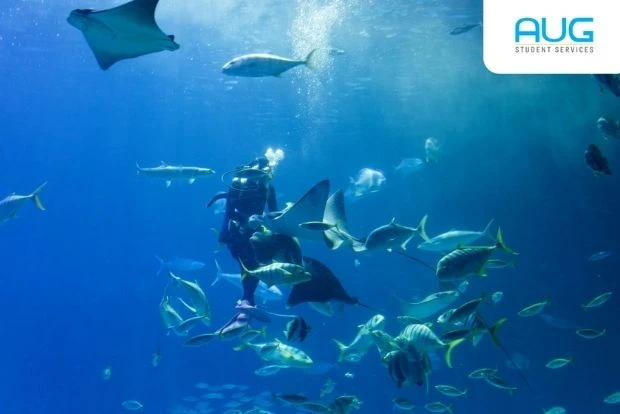
FAQ: Marine Biology Universities in Australia
Summary
澳大利亚 offers some of the finest marine biology education in the world. James Cook University, the University of Queensland, and the University of Tasmania lead the field, but strong programs also exist in Western Australia, South Australia, and New South Wales. When comparing marine biology universities in Australia, focus on location, fieldwork opportunities, research specialisations, and industry links rather than rankings alone. With growing investment in ocean science and conservation, graduates entering this field are stepping into a sector with genuine long-term demand.
Ready to Take the Next Step?
If you would like personalised guidance on courses, entry requirements, or applications, the team at AUG学生服务 is happy to help, thus feel free to reach out for a free consultation.