
 登录
登录 登记
登记


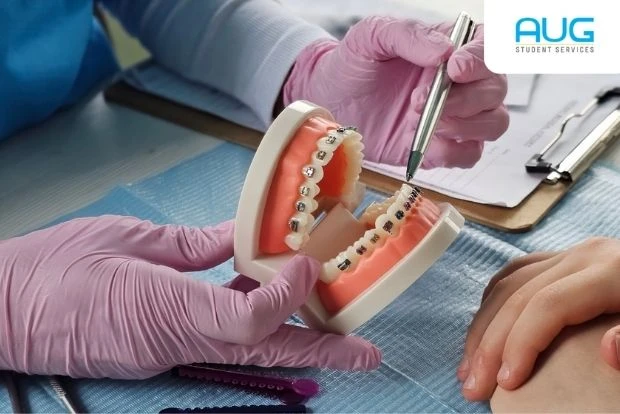
Picking a dental school is not like picking any other degree. After all, you are choosing a 5 to 9 year commitment, a country to live in, and the pathway that decides whether you can actually practise as a dentist once you graduate.
Given nine different providers, three types of entry tests, and government registration rules layered on top, it is easy to feel stuck before you have even started.
This guide breaks down the dentistry universities in Australia that welcome International Students. Specifically, it covers how their entry pathways differ, what registration actually involves, and what the whole journey tends to cost. By the end, you will know exactly where to look next.
Why Study Dentistry in Australia
Overall, Australia trains dentists to a standard recognised across much of the world. In fact, every dental degree here is accredited by the Australian Dental Council, and graduates register with the Dental Board of Australia through AHPRA, the national health practitioner regulator. Because of this, a degree from Perth carries the same registration weight as one from Sydney.
Beyond the paperwork, dental schools in Australia give students early, hands-on clinical exposure. Most programs put you in front of real patients well before your final year. This usually happens through university dental clinics or partnerships with public hospitals.
Dental Schools in Australia at a Glance
In total, nine universities currently offer accredited dentistry programs. In addition, most of them accept students straight from high school. The table below lays out the basics so you can compare them quickly.
| 大学 | Degree | 期间 | 地点 |
|---|---|---|---|
| 昆士兰大学 | Bachelor of Dental Science (Honours) | 5年 | 布里斯班 |
| 悉尼大学 | Doctor of Dental Medicine (DMD) | 4–7 years | 悉尼 |
| 墨尔本大学 | Doctor of Dental Surgery (DDS) | 4年 | 墨尔本 |
| Adelaide University | Bachelor of Dental Surgery (BDS) | 5年 | 阿德莱德 |
| 西澳大利亚大学 | Doctor of Dental Medicine (DMD) | 4年 | 珀斯 |
| 詹姆斯库克大学 | Bachelor of Dental Surgery (BDS) | 5年 | 凯恩斯 |
| 格里菲斯大学 | Bachelor of Dental Health Science + Master of Dentistry | 5年 | Gold Coast |
| 查尔斯特大学 | Bachelor of Dental Science | 5年 | Orange |
| 拉筹伯大学 | Bachelor of Dental Science (Honours) | 5年 | Bendigo |
A few things stand out here. First, course length and structure vary by university. Second, some schools run more than one pathway into the same degree, so the years shown are a general guide rather than a fixed rule.
Additionally, if you want to specialise later, UQ’s Doctor of Clinical Dentistry is a well-known pathway into fields like orthodontics, periodontics and oral surgery.

How Entry Pathways Work
Dentistry programs in Australia generally open up through one of two routes. Therefore, it helps to understand both before you start comparing universities.
直接进入
Direct entry takes you straight from high school into the dental degree. Universities base this on your final school results, an admissions test, and sometimes an interview or portfolio. As a result, you commit to dentistry from day one and complete the clinical training in one continuous run.
Entry via a Prior Degree
Entry via a prior degree asks you to complete a separate bachelor’s degree first, in any subject. After that, you apply into a shorter dental degree such as a DMD or DDS. Consequently, this suits students who are not yet sure about dentistry when they finish school, or who want a backup qualification built in along the way.
However, some dental councils only recognise degrees from universities they have separately accredited, and will not automatically recognise every accredited Australian dental school.
Offerings can change from year to year. Because of this, always check the current entry pathway on the university’s own admissions page before you apply, rather than assuming based on what a degree is called.
Entry Requirements for International Students
要求 vary by university and entry type, but a few elements show up almost everywhere.
- Academic results: Specifically, for undergraduate entry, universities look for a very high final-year average, often equivalent to a 95+ ATAR. For postgraduate entry, they check your bachelor’s degree GPA.
- Admissions test: Undergraduate applicants usually sit the UCAT ANZ. Postgraduate applicants typically need GAMSAT, though some universities also accept the Dental Admission Test (DAT) or Canadian Dental Aptitude Test (CDAT) for international candidates.
- English proficiency: Most dental schools ask for an IELTS overall score of 7.0, with no individual band below 7.0, or an equivalent score on TOEFL or PTE Academic.
- Portfolio or interview: Some universities ask for a written portfolio or an interview to assess your motivation and communication skills, since dentistry is a patient-facing profession.
- Inherent requirements: Clinical training involves physical tasks like fine motor work and prolonged standing. For this reason, universities publish inherent requirement documents outlining the skills you need to complete the course safely.
Notably, application timelines can differ from other degrees too. Several dental schools close applications months before the semester starts. So, it pays to check deadlines early rather than assuming standard university dates apply.
Registration: What Happens After You Graduate
Overall, within Australia, the process is straightforward. Once you finish an accredited dental degree, you do not need to sit any extra local exams to register. Your university enrols you as a registered dental student automatically, at no cost to you. Then, when you graduate, it reports your results directly to the Dental Board of Australia through AHPRA.
You then apply through the Ahpra portal, submit your documents, and get added to the national register once everything checks out.
If you plan to practise back in your home country after graduating, the picture depends on that country’s own rules, not on Australia’s. Some dental councils only recognise degrees from universities they have separately accredited, and will not automatically recognise every accredited Australian dental school.
For example, the Singapore Dental Council maintains its own list of recognised overseas qualifications, and other countries run similar systems. Before you commit to a university, check with your home country’s dental board or council to confirm which Australian dental schools it currently recognises. After all, this can shape which university makes the most sense for your long-term plans.
Graduates also have public-sector pathways worth knowing about within Australia. State health departments, including NSW Health, run programs that connect newly registered dentists with roles in public oral health services. For many graduates, this is a useful entry point into the workforce.

Tuition Fees and Cost of Studying Dentistry
Dentistry sits among the more expensive degrees in Australia because of its intensive clinical training and equipment costs. As a rough guide for International Students:
On top of that, additional costs — dental instruments, lab coats, safety equipment, and clinical placement travel — typically add a few thousand dollars per year.
Fees are reviewed annually, so always confirm current figures directly with the university before you apply.
Living costs in Australian cities also vary widely. Consequently, factoring these in early helps you budget realistically for the full length of the course.
Career Outlook for Dentistry Graduates
Typically, graduate dentists in Australia typically start on salaries in the range of A$ 88,000–A$ 130,000. Over time, earnings rise as you gain experience or move into private practice ownership.
Career paths include general practice, public health services, hospital dentistry, research, and further specialist training. That said, competition for graduate positions and clinical placements can be tight in major cities — another reason regional universities and rural placement programs are worth a serious look.

FAQ: Dentistry Universities in Australia
Your Next Step
Nine universities, two entry pathways, three types of admissions tests, and a national registration system to navigate — clearly, this is not a decision to make alone from search results and forum posts.
AUG学生服务 helps students compare dentistry universities in Australia against their results, budget, and goals. From there, we manage the application, Visa and enrolment process from start to finish, at no cost to the student.
So, if you are ready to see which dental schools you actually qualify for, book a free consultation and get a clear plan instead of another open browser tab.