
 登录
 登记


介绍
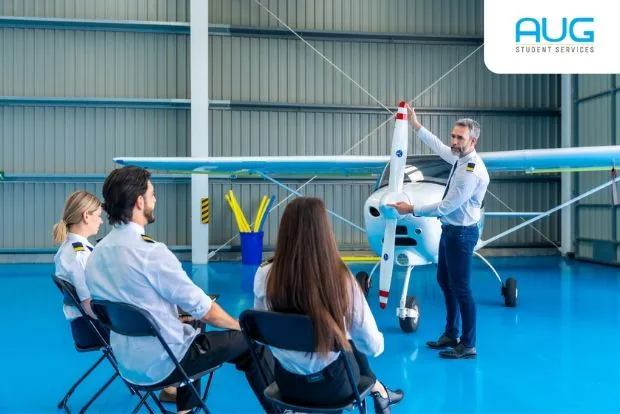
Dreaming of a career in the skies? If so, the choice to study aviation in New Zealand could be one of the smartest decisions you make. In fact, New Zealand combines uncrowded airspace, varied terrain and a strong safety culture. As a result, it has become a popular training ground for pilots, engineers and aviation managers from around the world.
This guide explains what it means to study aviation in New Zealand. Specifically, it covers course options, entry requirements, costs, visas and career outcomes. Above all, it aims to help you decide whether this pathway fits your goals.
Why This Matters
Indeed, Aviation is a global industry, and it is growing again. In fact, airlines are expanding fleets, and many senior pilots are reaching retirement age. Consequently, employers are looking for well-trained graduates who hold internationally recognised licences.
How to Study Aviation in New Zealand
Types of Aviation Courses
Aviation study in New Zealand is not limited to flying. Instead, you can choose from several pathways:
Leads to a Private Pilot Licence (PPL), Commercial Pilot Licence (CPL), Instrument Rating and, in some cases, a frozen Airline Transport Pilot Licence (ATPL).
A university degree that combines flight training with aviation theory, safety science and human factors.
Degrees and diplomas focused on airline operations, airport management and logistics.
Hands-on programmes leading to licensed engineer roles.
Diploma-level courses for those aiming at tourism, agriculture or rescue operations.

Where You Can Study
Providers range from a university to specialised flight schools. For example, the table below shows a selection of well-known options.
| Provider | 地点 | Key Programme |
|---|---|---|
| Massey University School of Aviation | 北帕默斯顿 | Bachelor of Aviation (Air Transport Pilot); Bachelor of Aviation Management |
| Nelson Aviation College | Motueka | New Zealand Diploma in Aviation (Aeroplane) |
| International Aviation Academy of NZ | Christchurch | Diploma in Aviation; airline cadet pathways |
| Ardmore Flying School | 奥克兰 | CPL and Instrument Rating training |
| Southern Wings | Invercargill / Auckland | Diploma in Aviation; instructor training |
| Air New Zealand Aviation Institute | Auckland / Christchurch | Aircraft engineering and technical training |
In particular, Massey University is the only New Zealand university that offers a full pilot degree. Meanwhile, private flight schools often provide faster, licence-focused routes.
Entry Requirements
Overall, requirements vary by provider. However, most programmes ask for the following:
- Completion of secondary school, ideally with mathematics, physics and English.
- An English test score such as IELTS 6.0 overall (higher for university degrees).
- A Class 1 Medical Certificate issued by a Civil Aviation Authority (CAA) approved examiner.
- A minimum age of 17 to hold a PPL and 18 to hold a CPL.
- For some schools, an aptitude test and interview.
How Long Does It Take?
A CPL with Instrument Rating usually takes 18 to 24 months of full-time study. In contrast, a Bachelor of Aviation takes three years. Similarly, aircraft maintenance engineering programmes typically run for two to three years, followed by workplace experience.
Cost of Studying Aviation in New Zealand
Indeed, flight training is expensive everywhere, and New Zealand is no exception. Even so, costs are often lower than in the United States, the United Kingdom or Australia. Approximate figures for international students are shown below.
| Programme | Approximate Tuition (NZD) |
|---|---|
| Diploma in Aviation (CPL + Instrument Rating) | NZ$110,000 – NZ$140,000 |
| Bachelor of Aviation (with flight training) | NZ$150,000 – NZ$180,000 total |
| Bachelor of Aviation Management | NZ$35,000 – NZ$40,000 per year |
| Aircraft Maintenance Engineering | NZ$25,000 – NZ$35,000 per year |
In addition, you should budget for living costs. For instance, Immigration New Zealand requires students to show NZ$20,000 per year for living expenses. Also, smaller cities such as Palmerston North and Nelson are generally cheaper than Auckland.

Student Visa and Work Rights
First, to study aviation in New Zealand, you will need a Fee-Paying Student Visa. Additionally, most students can work up to 20 hours per week during the semester and full-time during holidays. Finally, after graduation, bachelor’s degree holders may qualify for a Post-Study Work Visa of up to three years. However, rules for diploma graduates differ, so check the official guidance on the Immigration New Zealand website.
Career Outcomes
For example, graduates commonly start as flight instructors, charter pilots or regional airline first officers. Alternatively, others move into airport operations, safety management or air traffic control. Likewise, engineering graduates can work for airlines, maintenance organisations or defence contractors.
Because the CAA licence is ICAO compliant, many graduates later convert it for careers in Asia, the Middle East or Europe.
Things to Consider When Choosing an Aviation School
Choosing where to study aviation in New Zealand is a major decision. Therefore, the following tips can help you compare options objectively.
Confirm the provider is CAA-certified and registered with the New Zealand Qualifications Authority (NZQA).
Modern aircraft and full-motion simulators improve training quality.
Fewer students per instructor usually means more flying hours for you.
Ask whether quoted fees include exams, medicals, landing fees and extra flight hours.
Some schools run cadet programmes with regional or national carriers.
Regions with stable weather allow more consistent flying days.
Their employment outcomes are the best indicator of a school’s quality.
Summary
Next Steps
If you would like help comparing aviation providers or preparing your application, the team at AUG学生服务 is happy to offer free guidance. Feel free to get in touch whenever you are ready for your New Zealand journey.