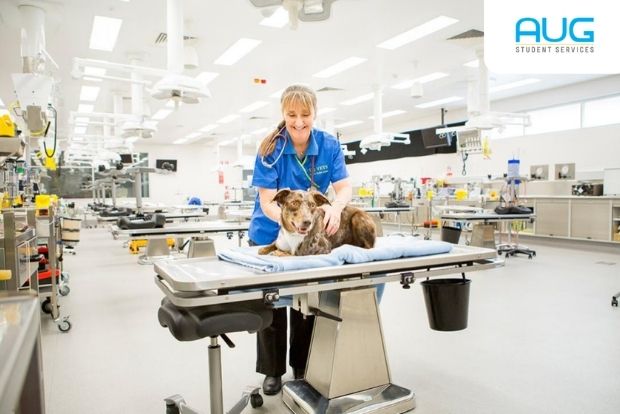
Đó là veterinary science degree in Australia is one of the most rewarding yet competitive study pathways for students who love animals and science. Australia has built a strong global reputation for veterinary education, with several universities ranked among the world’s best. These programs train graduates to treat companion animals but also to work in livestock health, wildlife conservation, biosecurity, and public health.
This guide explains what a veterinary science degree in Australia involves, which universities offer accredited programs, what the entry requirements are, how much it costs, and what career opportunities await after graduation. It also includes practical tips to help you choose the right university for your goals.
Why This Matters
Choosing where to study veterinary science is a major decision. In practice, the degree typically takes five to seven years, involves significant financial investment, and leads to a licensed profession. Because veterinary programs are highly competitive and only a small number of Australian universities offer them, understanding the requirements early gives you a real advantage.
For international students, Australia offers an added benefit: Australia, New Zealand, the United Kingdom, and in many cases North America and Asia recognise degrees accredited by the Australian Veterinary Boards Council (AVBC). This makes an Australian veterinary qualification genuinely portable across the world.
Studying Veterinary Science in Australia
What Does a Veterinary Science Degree Involve?
In short, veterinary science combines biology, chemistry, anatomy, physiology, pathology, pharmacology, and clinical practice. Students learn to diagnose, treat, and prevent disease in a wide range of species, from cats and dogs to cattle, horses, and native wildlife.
Most programs follow one of two structures:
Undergraduate entry: A combined or double degree taken straight after high school, usually lasting five to six years (for example, a Bachelor of Veterinary Biology followed by a Doctor of Veterinary Medicine).
Graduate entry: A Doctor of Veterinary Medicine (DVM) taken after completing a relevant bachelor’s degree, usually lasting four years.
In addition, all accredited programs include extensive hands-on clinical placements at university teaching hospitals, farms, and private clinics.
Universities Offering Accredited Veterinary Programs
Only seven Australian universities offer AVBC-accredited veterinary degrees:
| Trường đại học | Chương trình | Vị trí | Typical Duration |
|---|
| Đại học Sydney | Bachelor of Veterinary Biology / Doctor of Veterinary Medicine | New South Wales | 6 năm |
| Đại học Melbourne | Doctor of Veterinary Medicine (graduate entry) | Victoria | 4 years (plus bachelor’s) |
| Đại học Queensland | Bachelor of Veterinary Science (Honours) | Queensland | 5 năm |
| Đại học Murdoch | Bachelor of Science / Doctor of Veterinary Medicine | miền tây nước Úc | 5 năm |
| Adelaide University (formerly University of Adelaide) | Bachelor of Science (Veterinary Bioscience) / Doctor of Veterinary Medicine | Nam Úc | 6 năm |
| Đại học James Cook | Bachelor of Veterinary Science (Honours) | Queensland | 5 năm |
| Đại học Charles Sturt | Bachelor of Veterinary Biology / Doctor of Veterinary Medicine | New South Wales | 6 năm |
Entry Requirements
Veterinary science is one of the most competitive courses in Australia. Typical requirements include:
Academic results: A high ATAR (often 95 or above) or equivalent international qualifications such as A-Levels, IB, STPM, or UEC with strong grades.
Prerequisite subjects: Chemistry is almost always required; most universities also recommend or require biology, mathematics, and physics.
English proficiency: IELTS overall 7.0 (often with no band below 6.5 or 7.0), or an equivalent TOEFL or PTE score. Requirements are typically higher than for other degrees.
Additional selection: Some universities require an admissions test (such as CASPer), a written statement, evidence of animal-handling experience, or an interview.
Tuition Fees and Living Costs
Veterinary science is among the more expensive degrees due to its clinical and laboratory components. As a general guide for international students:
Tuition fees: Approximately A$ 55,000 to A$ 80,000 per year, depending on the university and stage of the program.
Living costs: The Australian Government’s benchmark for student living costs is around A$ 29,710 per year, though actual costs vary by city.
Additional costs: On top of this, equipment, protective clothing, travel to rural placements, and vaccinations may add to your budget.
Scholarships are available at most universities, ranging from partial tuition discounts to merit-based awards for high-achieving international students.
Career Outcomes
Once qualified, graduates of accredited programs can register with an Australian state or territory veterinary board and practise immediately. Career pathways include:
Clinical practice: Small animal, equine, livestock, or mixed practice.
Government and biosecurity: Disease surveillance, quarantine, and food safety roles.
Wildlife and conservation: Working with zoos, sanctuaries, and research organisations.
Research and academia: Postgraduate study leading to specialisation or university teaching.
Industry: Animal health companies, pharmaceuticals, and pet nutrition.
Australia’s skilled occupation lists consistently include veterinarians, which can support post-study work and migration pathways for international graduates who wish to remain in Australia.
Tips for Choosing the Right Veterinary School
When comparing universities, students should look beyond rankings alone. Here are practical considerations that experienced advisers commonly recommend:
Check accreditation first. Make sure the program is AVBC-accredited so that employers and licensing boards recognise your degree where you plan to work.
Next, compare program structures. Undergraduate-entry programs suit school leavers, while graduate-entry DVMs suit students who already hold a science degree.
Similarly, consider location and animal exposure. Regional universities often provide more hands-on experience with livestock and wildlife, while city campuses may offer larger small-animal caseloads.
Finally, look at clinical placement arrangements. Ask how early students begin practical work and whether the university runs its own teaching hospital.
Plan finances realistically. Factor in the full duration of the degree, not just the first year, and research scholarships early.
Prepare a backup pathway. Because entry is competitive, consider related degrees such as animal science or biomedical science that can lead into a graduate-entry DVM.

FAQ: Veterinary Science Degree in Australia
How long does a veterinary science degree in Australia take?
Most programs take five to six years for undergraduate entry, or four years for a graduate-entry DVM after a relevant bachelor’s degree.
Is an Australian veterinary degree recognised overseas?
Yes. Australia, New Zealand, and the UK recognise AVBC-accredited degrees, and many other countries hold them in strong regard too. Some destinations may require an additional licensing exam.
How competitive is entry?
Very competitive. Universities offer only a limited number of places, and applicants typically need excellent grades in chemistry and biology, strong English scores, and in some cases animal-handling experience or an admissions test.
Can I work in Australia after graduating?
Yes. Graduates may apply for a Temporary Graduate visa, and veterinarians are on the skilled occupation lists, which can support longer-term work and migration options.
What if I don’t meet the entry requirements?
Consider a related bachelor’s degree such as animal science, then apply for a graduate-entry DVM. Foundation programs and pathway courses may also help school leavers meet requirements.
Summary
Overall, a veterinary science degree in Australia offers world-class training, international recognition, and strong career prospects across clinical practice, research, conservation, and government roles. With only seven accredited universities and highly competitive entry, early planning is essential. Compare program structures, check accreditation, budget for the full duration of study, and prepare a backup pathway to give yourself the best chance of success.
Ready-to-Apply
If you would like personalised guidance on applying for veterinary science programs in Australia, including entry requirements, scholarships, and application timelines, feel free to reach out to Dịch vụ Sinh viên AUG for a free consultation.

 Đăng nhập
 Đăng ký