
 Đăng ký
 Đăng nhập


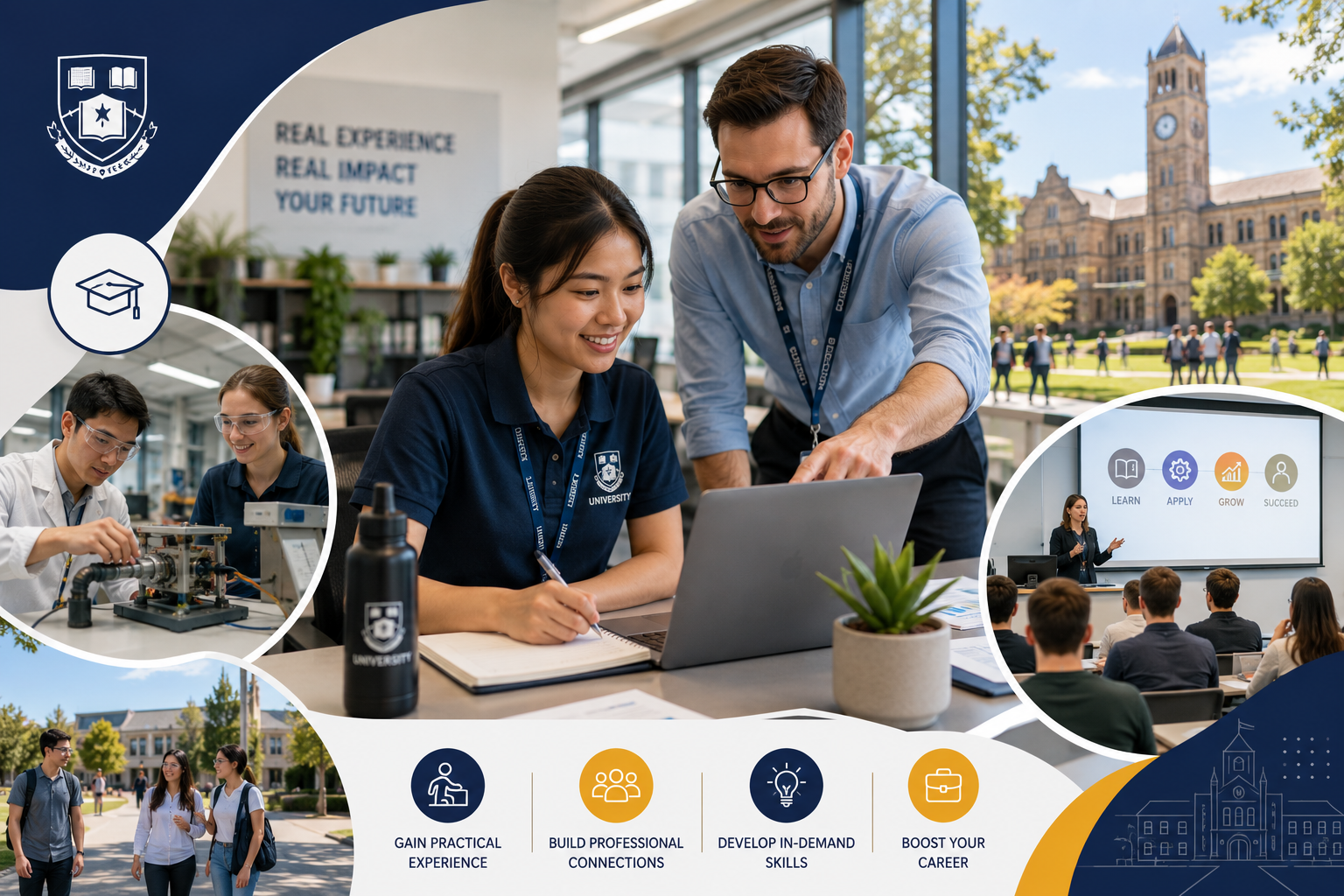
When researching Australian universities, international students often compare tuition fees, rankings, course duration and entry requirements.
A university degree can offer much more than lectures, assignments and exams. Depending on your course and university, you may come across Work-Integrated Learning (WIL), internships, clinical placements, industry projects, research opportunities, study tours, competitions and entrepreneurship programs.
Some opportunities may be optional, while others are built into the degree. Knowing what is available can be a useful way to compare universities beyond rankings and tuition fees.
What Is Work-Integrated Learning (WIL)?
Work-Integrated Learning (WIL) connects what you learn at university with professional practice.
WIL can include internships, workplace placements, industry projects, fieldwork and professional simulations. Some opportunities may even be offered as credit-bearing units, allowing students to gain practical experience while progressing towards their degree.
💡 Worth knowing:
WIL is only one form of practical learning. The type of experience available can look very different depending on your degree and university.
Engineering: Building Experience Before Graduation
Engineering students may have opportunities to complete professional practice, industry projects, internships or other practical experiences during their degree.
One challenge is that students may sometimes need to actively search for suitable opportunities themselves.
For international students who are still becoming familiar with the Australian employment market, this can make gaining that first experience feel challenging.
When comparing engineering courses, it may be worth looking at how practical experience works. Some universities may help connect students with employers, while others may expect students to organise their own opportunities.
Nursing: Understanding Clinical Placement
For nursing students, practical experience is not simply an optional addition to a résumé. Clinical placement is a fundamental part of nursing education.
Students may spend significant periods gaining supervised experience in hospitals, aged-care facilities, community health services and other clinical environments.
Placement can also affect everyday life. During intensive placement periods, students may have less time available for their usual paid employment while still needing to manage living expenses.
Placement length and location can vary between courses. Looking at these details early can give you a better idea of the time, travel and potential costs involved.
Medicine: Clinical Experience Is Part of the Journey
Medicine follows a different pathway. Rather than relying mainly on a separate internship elective, clinical learning is progressively built into medical education.
Students gain experience across hospitals, clinics and other healthcare environments while developing clinical skills under supervision.
It is also useful to distinguish university clinical placements from the medical internship undertaken after graduating from medical school.
When looking at medical programs, considering the broader pathway can be just as useful as comparing the university degree itself.
Practical Experience Beyond Placements
Placements and internships are not the only ways to gain practical experience. Universities may offer a range of opportunities that are easy to overlook when first exploring a course.
Industry Projects
You may have the chance to work on real challenges supplied by businesses or community organisations and build examples for your portfolio and future interviews.
Research Programs
Summer research programs, vacation scholarships, research projects and Honours pathways may be worth exploring if research or technical careers interest you.
Start-Up Programs
Some universities offer incubators, accelerators and start-up programs where students can develop ideas and connect with mentors or potential co-founders.
Global Programs
Exchanges, overseas study tours, international fieldwork and global industry experiences can offer another way to develop practical and cross-cultural skills.
Community Programs
Depending on your field, volunteering, legal clinics, community projects and pro bono programs may provide another form of hands-on experience.
Competitions & Challenges
Case competitions, cybersecurity challenges, engineering competitions and hackathons can be useful ways to practise solving realistic problems.
Not every useful experience needs to be a semester-long internship. A short industry project, competition or research program can still give you something valuable to discuss in future job interviews.Keep in mind that universities may use different names for similar programs, so it is worth exploring each university’s course and opportunity pages carefully.
What Could Practical Experience Look Like in Your Degree?
The type of practical experience available will depend heavily on your study area. Here are some common examples:
💡 A Useful Tip When Comparing Universities
Two universities may offer degrees with similar names and tuition fees but provide quite different practical learning opportunities.
When comparing your options, it may be useful to consider:
- Whether internships, placements or industry projects are available
- Whether practical experience is optional or built into the course
- How much support the university provides when finding placements
- Whether students usually need to organise their own placements
- Whether placements are paid or unpaid
- Possible travel, accommodation or equipment costs
- Whether practical experience can count towards the degree
- Other opportunities such as research, exchange programs or entrepreneurship
A Quick Course Handbook Look Out
Some practical opportunities may not be immediately obvious on the main university course page. A quick look through the course handbook or individual unit descriptions can sometimes reveal much more.
When browsing, keep an eye out for terms such as:
Kỳ thực tập
WIL
Industry Placement
Thực hành chuyên nghiệp
Clinical Placement
Fieldwork
Industry Project
Nghiên cứu
Exchange
tinh thần kinh doanh
Making the Most of Your University Experience
If the opportunity is available, practical experience can be a great way to graduate with more than a qualification. It may help you build professional connections, real examples of your work and a clearer understanding of the industry you are preparing to enter.
Helpful Resources
Explore the helpful resources below to learn more about study opportunities, practical experience, career development and other programs available to international students in Australia.
Tip: Programs, eligibility requirements and application dates can vary between universities. Always check the official university website for the latest information.
Not Sure Which University Is Right for You?
An AUG Education Counsellor can help you explore universities and courses based on your study interests, budget, location preferences and the opportunities available throughout your degree.
Ask about WIL, internships, placements, industry projects, research opportunities and other practical experiences when discussing your university options.