
 Đăng nhập
 Đăng ký



Finding the right student accommodation in the USA is one of the first big decisions you will make as an International Student. The United States hosts over one million International Students each year. However, housing systems vary widely from one university to another. Some campuses require first-year students to live in dormitories. Others expect you to find a private rental on your own.
This guide explains the main housing options, typical costs and common lease conditions. It also offers practical tips to help you choose wisely. As a result, you can plan your budget and avoid last-minute stress before you arrive.
Beyond money, where you live shapes your daily experience. On-campus housing makes it easier to meet people and join activities. Off-campus living, on the other hand, offers independence and often more space. In addition, Visa rules, deposit requirements and lease lengths can catch new students off guard. Understanding these details early helps you make a confident decision.
Types of Student Accommodation in the USA
Student accommodation in the USA generally falls into two categories: on-campus housing and off-campus housing. Each has distinct features.
On-Campus Housing
- Traditional residence halls (dorms): Shared rooms with communal bathrooms and lounges. These are the most affordable and social option.
- Suite-style rooms: Two to four bedrooms share a private bathroom and sometimes a small living area.
- University apartments: Self-contained units with a kitchen. These are often reserved for upper-year or graduate students.
- Themed or living-learning communities: Floors grouped by interest, major or language. For example, international houses or honours halls.
Most on-campus contracts run for the academic year, which is roughly nine months. Many also include a mandatory meal plan. Importantly, many universities require first-year students to live on campus. Check this policy before you apply.
Off-Campus Housing
- Private rentals: Apartments or houses leased directly from a landlord or agency. Students often share these with roommates.
- Purpose-built student accommodation (PBSA): Privately managed buildings near campus with furnished rooms and student-focused services.
- Homestays: Living with a local family, often with meals included. This option is popular for short programmes and younger students.
- Fraternity or sorority houses: Available only to members of Greek organisations on some campuses.
Off-campus leases usually last 12 months. Consequently, you may pay rent during the summer even if you travel home. Some landlords allow subletting, but you must confirm this in writing.

Supporting Information: Costs and Practical Considerations
Average Costs
Costs depend heavily on location. Below is a general comparison to help you plan.
| Housing Type | Typical Cost | Notes |
|---|---|---|
| On-campus room and board | USD 12,000 – 15,000 per academic year | Usually includes meals and utilities |
| Off-campus shared apartment (mid-size city) | USD 700 – 1,200 per month | Utilities and internet often extra |
| Off-campus shared apartment (major city) | USD 1,300 – 2,500 per month | Boston, New York, San Francisco, Los Angeles |
| Ở trọ | USD 900 – 1,800 per month | Often includes some meals |
Remember to budget for extras. These include a security deposit (often one month’s rent), application fees, renters insurance, furniture and utilities such as electricity, water and internet.
Common Challenges for International Students
- No US credit history: Landlords may ask for a guarantor or several months of rent upfront.
- Remote searching: Signing a lease before seeing the property increases the risk of scams. Never transfer money before verifying the landlord.
- Timing: On-campus housing applications often close in May for an August start. Off-campus markets in college towns can fill up by early summer.
- Transport: Many US campuses are car-dependent. Check bus routes or shuttle services before choosing a location.

Things to Consider When Choosing Student Accommodation
Every student has different priorities. Even so, the following points apply to almost everyone.
Start with your university’s housing office. They know local rules, approved landlords and realistic prices. Their listings are also less likely to be scams.
Calculate the total cost, not just the rent. Add utilities, meal plans, transport and summer months. A cheaper apartment far from campus may cost more once you include a car or long commutes.
Consider living on campus in your first year. It simplifies arrival, builds friendships quickly and gives you time to learn the local rental market.
Read the lease carefully. Look for the lease length, early termination fees, subletting rules and who pays for repairs. Ask questions before you sign.
Verify everything before paying. Request a video call walkthrough, confirm the landlord’s identity and use traceable payment methods. Avoid wire transfers to individuals.
Think about lifestyle fit. Do you prefer quiet study spaces or a social environment? Do you cook, or would a meal plan suit you better? Honest answers make better choices.
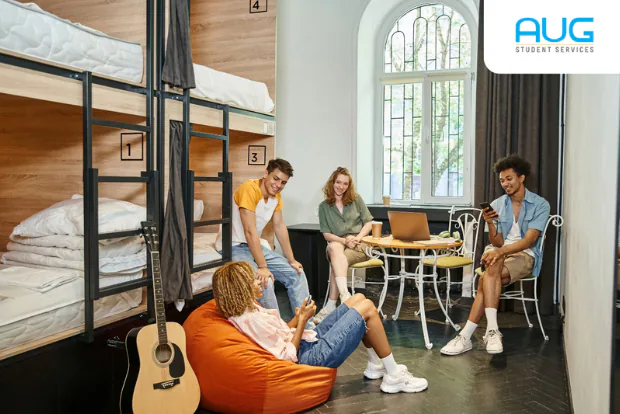
Keep a backup plan. Temporary housing, such as a hostel or short-term rental for the first week, gives you flexibility if plans change.
Summary
Choosing student accommodation in the USA involves balancing cost, convenience and lifestyle. On-campus housing offers simplicity and community, especially in your first year. Off-campus options provide independence but require more planning and often a 12-month commitment. In both cases, start early, budget for hidden costs and verify every detail before you pay. With careful research, you can find a home that supports both your studies and your wellbeing.
Ready-to-Apply
If you would like help comparing universities or planning your move, the Dịch vụ Sinh viên AUG team in is happy to answer your questions. Reach out whenever you are ready.